
Gutters overflowing in heavy rain: what is normal, what is a blockage, and what to do in Cairns
By Trisim Property Maintenance, CairnsLast reviewed
- 9 min read
- 9 sources checked
- 6 questions answered
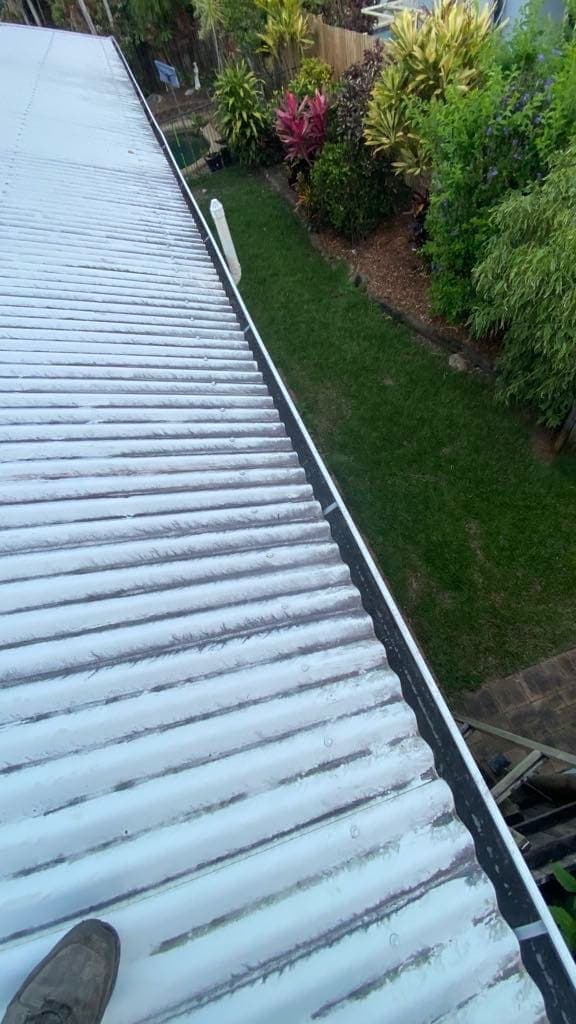
Gutters overflow in heavy rain because of a blockage in the gutter or downpipe, a layout fault such as too few downpipes or a sagging run, or a downpour heavier than the gutter was built for. Some spill in an extreme burst is expected; water getting into the eaves or walls is a fault to fix before the wet.
Cairns gutters are tested every wet season, and the question tends to arrive in the middle of a downpour with water sheeting off the front of the house. Not all overflow is a failure: Australian gutters are designed to a limit, and the rules for new homes plan for what happens past it.
This guide covers what the building code expects, how to read the signs from the ground, and where a clean ends and licensed roof plumbing begins. If you already know the gutters are full, our gutter cleaning service clears gutters and downpipes across Cairns, quoted before any work starts.
Is it normal for gutters to overflow in heavy rain? Sometimes, by design
Some overflow in a severe downpour is expected, and on a well-built roof it is planned for. The explanatory notes to Part 7.4 of the ABCB Housing Provisions (National Construction Code 2022) say roof drainage systems are not designed to remove all water during exceptionally heavy rain, particularly in tropical areas. Eaves gutters are sized for a storm with a 5 per cent chance of happening in any year, provided they are not blocked.
For rarer storms, up to a 1 per cent chance in any year, the provisions call for overflow measures that send the extra water away so it does not pond against, enter or damage the building, even if the drainage system is blocked. The Australian Building Codes Board describes two kinds:
- Continuous measures: these run along a length of gutter, for example slots at regular intervals along the front face of the gutter.
- Dedicated measures: specific points where overflow can occur, for example a rainhead at the top of a downpipe, whose overflow should be directed away from the building.
So water spilling out of the front of a slotted gutter in a cloudburst may be the system doing its job. Water getting into the eaves lining, the roof space or down an inside wall is not. Some gutters use a controlled back gap, a spacer that lets overflow spill down the outside of the fascia, so judge by where the water ends up. A licensed roof plumber can tell you whether your gutters have overflow measures.
How hard Cairns rain tests a gutter
Gutter design in Australia starts from local rainfall intensity, and Table 7.4.3d of the Housing Provisions lists it town by town. For Cairns, the five-minute design intensity is 230 mm an hour for the gutter itself and 279 mm an hour for its overflow measures. Melbourne's figures are 132 and 187. A Cairns gutter is built for much heavier bursts than a southern one, so advice written for a Melbourne roof does not always carry across.
The other difference is how often the gutters are tested. Bureau of Meteorology long-term statistics for Cairns Aero show 404.8 mm of rain in an average January, 437.5 mm in February and 422.1 mm in March, with about five days in each of those months bringing 25 mm or more. The highest daily totals on record at the station are 368.3 mm in January and 402.8 mm in March. A gutter half full of leaf litter meets those days with less room than it was built for.
Why are my gutters overflowing? Symptoms and likely causes
Where the water comes over usually points to the cause. Watch from the ground or a window during a heavy shower, then match what you see:
- Overflow along a whole run, with leaves or seedlings visible at the gutter edge: a blocked gutter. Debris holds the water back and the gutter fills before it can drain.
- Overflow concentrated near a downpipe, with little water coming out at the bottom: a blocked downpipe. A gutter can be clear and still overflow when the outlet below it is packed.
- Overflow at the far end of a long run, away from any downpipe: possibly too few downpipes. The Housing Provisions say insufficient and poorly located downpipes are a frequent cause of poor roof drainage, and limit each downpipe to 12 m of gutter.
- Water sitting in the gutter days after rain: a fall problem or a sag. The Housing Provisions call for eaves gutters to fall at least 1:500 to the outlets (the ABCB notes an exception for gutters fixed to a metal fascia), and a flat or dropped section holds water instead.
- Water overshooting the gutter below a valley, where two roof slopes meet: concentrated flow. The provisions place downpipes near valley gutters so the concentrated water from those areas is removed.
Only the first two are cleaning jobs. The rest come down to how the gutters were sized, fixed or laid out, which is work for a licensed tradesperson.
How to tell if a downpipe is blocked, from the ground
A blocked downpipe usually gives itself away at the bottom before anyone needs to climb to the top. These checks need no ladder:
- 1In steady rain, look at where the downpipe meets the ground or its stormwater pipe. A strong flow means it is moving water; a trickle while the gutter above is spilling over points to a blockage.
- 2Follow the water to where it leaves the property. Cairns Regional Council says roof water pipes connect to the gutters and carry the water to a lawful point of discharge, typically the kerb and channel at the front. Roof water pipes on the verge belong to the homeowner, who maintains them up to and including the kerb adaptor, so clear any leaves or silt you can reach from the street.
- 3Look for water bubbling up or pooling along the line of the underground pipe. Council says broken pipes are the property owner's responsibility to repair, and that roof water must not be directed so it pools and becomes stagnant.
- 4Keep garden waste out of the system. Council warns that dumping grass and tree clippings into drains may cause blockages during heavy rain.
Clearing the top of a downpipe is a ladder job for a dry day. For standing water around the yard, see our guide to stopping mosquitoes breeding in a Cairns yard.
While it is raining: stay off the ladder and take notes
Do not climb up to fix an overflowing gutter during a storm. The Queensland Government's ladder safety advice says never to use ladders in thunderstorms, rain or wind, and that over 1,000 Queenslanders are hospitalised each year after falling off ladders, most of them around the home. The job during the storm is to record it:
- Note where the water comes over: the front, the back, near a downpipe, at a corner or below a valley.
- Take photos or a short video from the ground or a window.
- Once the rain stops, check the ceilings, walls and eaves lining under the overflow point for stains or damp.
In a rental, report it to the property manager, ideally in writing with photos. The Residential Tenancies Authority says that if the tenant has not done anything to block the gutters, the property manager or owner may be responsible for cleaning them, and that, for drains, a tenant who caused a blockage may have to pay for removal and any damage. This is general information, not legal advice; the RTA can help with a specific tenancy. Our guide to who cleans the gutters in a Queensland rental covers the detail. Before anyone goes up in dry weather, read cleaning your own gutters: ladder safety and tools.
Where clearing stops and licensed roof plumbing starts
Clearing debris out of a gutter removes a blockage without changing the system. Changing the system is licensed trade work. The Queensland Building and Construction Commission (QBCC) lists metal fascias and gutters in the scope of its plumbing and drainage licence, and a separate metal fascias and gutters licence covers fabricating and installing rainwater goods. Call a licensed plumber or roof plumber for:
- Re-hanging or re-falling a gutter that sags or holds water.
- Adding downpipes, moving them, or fitting overflow measures.
- Replacing a rusted or split gutter, or upsizing to a bigger profile.
- Repairing a broken or collapsed underground stormwater pipe.
Ask for the tradesperson's QBCC licence number before the work starts.
Fix it before the wet, not during it
The Queensland Government's prepare your home guidance says to act before storm, cyclone and monsoon season, and to clean gutters and downpipes so water can drain away as quickly as possible.
In Cairns the dry end of the year gives the window. Cairns Aero averages 34.1 mm of rain in September and 47.2 mm in October, against more than 400 mm a month from January to March. A clear then means the gutters start the wet empty, and any fault that is not a blockage shows up in the early storms rather than the worst ones.
Our pre-wet-season yard and gutter checklist puts the gutters alongside the other yard jobs worth finishing before the rain sets in.
Getting the gutters and downpipes cleared
If the overflow is a blockage, Trisim's gutter cleaning service clears the full gutter run and the downpipes rather than skimming the visible leaf, because a clear gutter feeding a blocked downpipe still overflows. Every job is quoted before it starts. Trisim carries public liability insurance, the team is police-checked, and the business works for property managers, agents and landlords across Cairns.
Trisim also mows lawns in beachside suburbs including Holloways Beach, Machans Beach and Clifton Beach, so ask about the gutters when you book the lawn. If the clear turns up a sagging run or a split joint, that is the point to bring in a licensed roof plumber.
Common questions from Cairns residents
It can be. Australian building rules size eaves gutters for a storm with a 5 per cent chance in any year, provided they are not blocked, and call for overflow measures that send heavier rain away from the building. Water spilling from front slots during a cloudburst may be the design working. Water getting into the eaves lining or inside the house is a fault to fix.
A common culprit is the downpipe. A gutter can look clear while the downpipe below it is packed with silt and leaves, so water backs up and spills over near the outlet. Other causes are too few downpipes for the length of gutter, a sagging section that has lost its fall, or a valley pouring concentrated water into one spot. Those last three need a licensed plumber rather than a clean.
Watch it in steady rain. If the gutter above is spilling over but only a trickle comes out at the bottom, the downpipe is likely blocked. Also check the kerb outlet at the front of the property, which Cairns homeowners maintain, and look for water pooling or bubbling up along the underground pipe. Clearing the top of a downpipe is a ladder job, so leave it for a dry day.
For repairs or changes, use a QBCC-licensed tradesperson. The QBCC lists metal fascias and gutters in the scope of its plumbing and drainage licence and has a separate metal fascias and gutters licence. Re-hanging or re-falling gutters, adding or moving downpipes, fitting overflow measures and repairing broken stormwater pipes are jobs for a licensed tradesperson. Ask for their licence number first.
Often the owner, through the property manager: the RTA says that if the tenant has not done anything to block the gutters, the owner or manager may be responsible for cleaning them. For drains, a tenant who caused a blockage may have to pay for removal and any damage. Tenants should report overflow in writing, with photos, and stay off the roof. This is general information; the RTA can advise on a specific tenancy.
September or October suits most homes. They are far drier than the wet season at Cairns Aero, averaging 34.1 mm and 47.2 mm of rain against more than 400 mm a month from January to March, so roofs are more often dry and safer to work on. Clearing then means the gutters start the wet empty, and any fault that is not a blockage shows up in the early storms, while there is still time to get it repaired before January.
Sources
- Housing Provisions Part 7.4: Gutters and downpipes (NCC 2022), Australian Building Codes Board. Accessed .
- Gutter and downpipe provisions for housing, Australian Building Codes Board. Accessed .
- Climate statistics for Australian locations: Cairns Aero (031011), all years, Bureau of Meteorology. Accessed .
- Stormwater disposal responsibilities, Cairns Regional Council. Accessed .
- Plumbing and drainage licence, Queensland Building and Construction Commission. Accessed .
- Metal fascias and gutters licence, Queensland Building and Construction Commission. Accessed .
- Ladder safety, Queensland Government. Accessed .
- Prepare your home, Queensland Government. Accessed .
- Drains and gutters, Residential Tenancies Authority. Accessed .
Last reviewed by Trisim Property Maintenance. Rules and council services change, so check the source before you rely on a date or a fee.
Related services
Lawn mowing around Cairns
From the Knowledgebase
- Cleaning your own gutters in Cairns: ladder safety, tools and when to stopThinking of clearing your own gutters? Ladder injury facts, Queensland ladder and power line safety advice, tool options, and when to leave it to someone else.Read the article
- Who cleans the gutters in a Queensland rental?What the RTA says tenants and owners each cover for rental gutters in Queensland, who pays for overflow damage, entry notice rules and when to book in Cairns.Read the article
- How to stop mosquitoes breeding in your Cairns yard: a weekly checklist for the dengue mosquitoA weekly yard checklist for Cairns: where the dengue mosquito breeds, from gutters and palm fronds to pot saucers, and what Wolbachia does and does not change.Read the article
- Pre-wet-season yard and gutter checklist for CairnsA pre-wet-season yard checklist for Cairns before cyclone season: gutters, green waste, branches, loose items, rental roles and the after-storm clean-up.Read the article
Book a gutter and downpipe clear before the wet
Tell us where the water came over and we will quote the clear before any work starts.