
Singapore daisy in Cairns gardens: what the law says, how to remove it and where it can go
By Trisim Property Maintenance, CairnsLast reviewed
- 10 min read
- 9 sources checked
- 7 questions answered
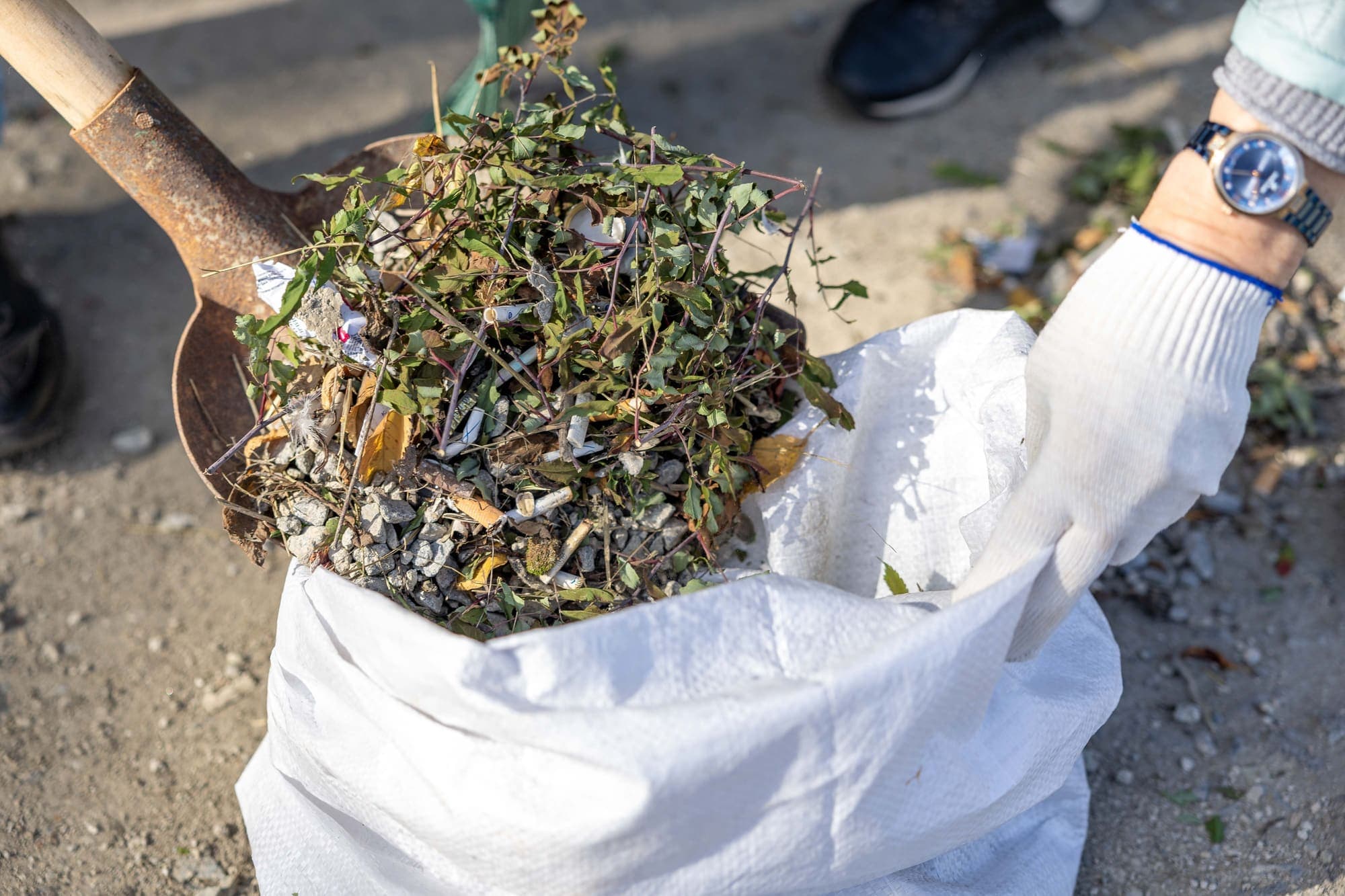
Yes, Singapore daisy is invasive: it is a category 3 restricted invasive plant in Queensland, so you must not give it away, sell it or dump it. Remove it by hand-pulling and digging up the runners, dispose of the waste carefully, keep it out of your green waste, and check the spot again for regrowth.
Singapore daisy is the glossy, yellow-flowered ground cover that creeps across garden beds, lawn edges and drain lines in Cairns. It looks harmless, but it is a restricted pest plant in Queensland, and the usual ways of tidying it up, mowing over it or tipping it in with the prunings, can spread it.
This guide covers what Queensland's rules mean for a householder, landlord or vendor, how to identify it, how to pull it out without leaving fragments, and how to dispose of it legally in Cairns. If the patch is big and you would rather not deal with the pile, our green waste removal service loads and takes garden waste away, with the disposal quoted up front; tell us when you book that Singapore daisy is in the pile so its disposal can be sorted in the quote.
Is Singapore daisy invasive? Yes, and it is restricted in Queensland
Singapore daisy (Sphagneticola trilobata) is invasive, and Queensland law treats it that way. Business Queensland describes it as a vigorous ground cover, native to tropical America, that spreads rapidly and out-competes native plants. In Queensland it also invades lawns, irrigated areas and areas around drains.
The Cairns Region Biosecurity Plan 2025-2030 gives Singapore daisy a risk category of Very High and says it is widespread and established throughout the Cairns Region, commonly found in riparian areas. The plan also notes that it is allelopathic: it releases a toxin that inhibits the growth and germination of other plants.
Council's plan records significant historical use for erosion control and for suppressing rank grasses on drain lines in the region, yet during floods it is a poor bank stabiliser because it tends to roll up off the creek bank. Brisbane City Council's weed identification tool notes that it is regarded as among the top 100 of the world's worst invasive alien species.
How to identify Singapore daisy, and the native plant it is confused with
You can identify Singapore daisy by its glossy, usually three-lobed leaves and small yellow daisy flowers on a low, spreading mat. Queensland government and council sources describe these features:
- Leaves: lush, glossy green, usually three-lobed, growing in pairs along the stem.
- Flowers: yellow to orange-yellow and daisy-like, about 2 cm wide, on short stalks above the leaves. It flowers year-round, mostly from spring to autumn.
- Runners: brown or maroon stems that root wherever they touch the soil. NSW WeedWise records stems up to 2 m long that root from the nodes.
- Habit: a dense, low ground cover, or occasionally a low-climbing plant.
- Where it turns up: gardens, parks, footpaths, roadsides, lawns and drains. Business Queensland lists South East Queensland and coastal areas of northern and Central Queensland.
The look-alike to check for is a native. Business Queensland names native beach flower as the similar species, and NSW WeedWise describes the native beach sunflower as having unlobed leaves, hairy upper leaf surfaces and flowers often in small clusters. If the leaves are not lobed, look again before you pull anything out.
What the law means for a Cairns householder
For a householder, the law comes down to three things: do not pass Singapore daisy on, do not dump it, and manage it on land you control. Business Queensland states that Singapore daisy is a category 3 restricted invasive plant under the Biosecurity Act 2014, and that you must not give it away, sell it or release it into the environment. Penalties may apply.
In practical terms, that rules out some very ordinary garden habits:
- Giving cuttings or a potted piece to a neighbour, or offering it on a community page as a free ground cover.
- Selling it at a garage sale or market stall, even as a pot plant.
- Tipping cuttings over the back fence, into bushland, a creek or a drain, or onto a vacant block.
The second part is the general biosecurity obligation. Business Queensland says you must take all reasonable and practical measures to minimise the biosecurity risks of Singapore daisy under your control. Cairns Regional Council explains that the obligation covers risks you know about, or should reasonably be expected to know about, and that Council officers have powers to ensure pests are managed on public and private property.
This is general information, not legal advice. For your own situation, read the Business Queensland Singapore daisy page or call Cairns Regional Council on 1300 69 22 47.
How to remove Singapore daisy by hand without spreading it
To remove Singapore daisy by hand, pull it and dig up the runners, then dispose of the waste carefully. Business Queensland lists hand-pulling and digging up runners as the physical control, and warns that the smallest cutting can regrow. NSW WeedWise adds that new plants grow from very small stem fragments, which take root where they touch the ground. The job is mostly about not leaving pieces behind.
- 1Do not mow, slash or whipper-snip it first. Business Queensland says it spreads mainly by cuttings from slashing and pruning, and NSW WeedWise lists mowing and slashing among the ways plant parts get moved around.
- 2Lay a tarp or open bags next to the patch so pulled material never sits on bare soil or lawn.
- 3Work from the edge of the mat inwards, lifting each runner and following it back to where it has rooted. Dig out the rooted sections rather than snapping the stems.
- 4Bag material as you go and tie the bags off rather than leaving a pile on the ground.
- 5Rake or pick over the cleared soil and the tarp for stray pieces, and check your shoes, tools and wheelbarrow before moving to another part of the yard.
- 6Come back to the spot later and pull anything that has reshot. NSW WeedWise says repeated follow-up, such as repeated hand pulling, is often necessary.
Can Singapore daisy go in the green waste? No: how to dispose of it in Cairns
Singapore daisy should not go in with your green waste. The Cairns Region Biosecurity Plan 2025-2030 says that if your property has an active infestation, you should make sure your green waste does not contain Singapore daisy and that it is disposed of in line with the regulation. The plan also notes that the spread of many plants can occur when green waste is not disposed of responsibly.
Under the regulation, the plan lists suitable disposal options for Singapore daisy:
- Deep burial.
- Transporting it to a waste facility securely.
- Sealing it in plastic and leaving it in the sun until the plant material has dried and decomposed.
If you are taking it to a waste facility, our practical suggestion is to bag it or cover the load, which keeps fragments from escaping on the way.
Cairns does not have a garden waste wheelie bin. Council's bin page describes a red or green lid waste bin for general household waste, collected weekly, and a yellow lid recycling bin collected fortnightly; the green lids are older waste bin lids being phased out. Council's pages do not say whether bagged Singapore daisy can go in the waste bin, so ask Council on 1300 69 22 47 before relying on it. The same applies to the free green waste days: keep the daisy out of that trailer load and ask Council where bagged material should go at the transfer station.
Why Singapore daisy keeps coming back, and how mulch and replanting help
Singapore daisy can come back from what is left behind: NSW WeedWise says new plants can grow from very small stem fragments. It also says successful weed control relies on follow-up, looking for and killing regrowth or new seedlings, and that using a combination of control methods is usually more successful.
Mulch helps, but treat it as one part of the plan rather than the fix. Queensland Government waterwise guidance says coarse organic mulch is good for reducing weeds, that the soil should be prepared by removing weeds first, and that large chunks such as pine bark need a layer more than 5 cm deep. We found no Queensland guidance that says mulch alone stops Singapore daisy, so keep checking the bed after it is mulched. Our guide to choosing mulch for Cairns garden beds compares the options, and the guide to weed mat under mulch in tropical gardens covers whether a barrier layer is worth it.
Replanting closes the gap. Council's biosecurity plan notes that chopping or grubbing weeds reduces competition while desirable plants re-establish, and an older Far North Queensland weed guide describes Singapore daisy as intolerant of deep shade. Business Queensland lists disturbed areas among the places it is found, so avoid leaving cleared ground bare.
Business Queensland says herbicides are effective. If you choose to spray, follow the product label and the Biosecurity Queensland Singapore daisy fact sheet, which sets out the herbicide control and application rates.
Clearing a large patch: book green waste removal and mulching
A large infestation is mostly a labour and disposal problem: hours of pulling, then bags of runners that must be kept separate and taken somewhere suitable. Landlords between tenants, vendors getting ready to list and owners short on time can book the removal and disposal side of the job.
Trisim's green waste removal service loads garden waste and takes it away, with the disposal inside the quote rather than added at the end, and keeps green waste separate from general rubbish. Tell us when you book that Singapore daisy is part of the pile so it can be discussed in the quote. Once the bed is clear, our garden mulching service prepares the bed and lays the mulch, including Caribbean Pine Bark for weed blocking.
We work across Cairns, including suburbs such as Edge Hill, Whitfield and Earlville, and we only do quoted work, so the cost is settled before anyone starts.
Common questions from Cairns residents
Under Queensland's Biosecurity Act 2014 it is not banned from gardens: it is a category 3 restricted invasive plant, not category 5, the category that must not be kept. You must not give it away, sell it or release it into the environment, and you must take all reasonable and practical measures to minimise its biosecurity risks under your control. Cairns Regional Council's biosecurity plan may include further actions, some required under local laws, so check with Council. Penalties may apply. This is general information, not legal advice.
Check with Council first. Cairns has no garden waste bin, only a red or green lid general waste bin and a yellow lid recycling bin, and Council's bin page does not mention restricted weeds. Its biosecurity plan lists deep burial, secure transport to a waste facility, or sealing the material in plastic in the sun until it has dried and decomposed. Call 1300 69 22 47 to confirm the right option.
Because pieces left behind can take root. Business Queensland warns that the smallest cutting can regrow, and Cairns Regional Council's biosecurity plan describes its runners rooting wherever they contact the soil, so a fragment left on the ground can become a new plant. Pull and dig out whole runners, bag everything as you work, and keep returning to remove regrowth until none appears.
Not on its own. Coarse organic mulch is good for reducing weeds in general, according to Queensland Government waterwise guidance, but no Queensland guidance we found says it controls Singapore daisy by itself. Clear every runner first, lay coarse mulch such as pine bark more than 5 cm deep, replant the bare ground, and keep checking for shoots coming up through or along the edges of the mulch.
No. Category 3 restricted invasive plants must not be distributed by sale or gift, or released into the environment, so passing cuttings, pots or a tray of ground cover to a neighbour, a friend or a community swap breaks the rule. Dispose of your own cuttings properly instead.
No. Singapore daisy is native to tropical America and has been widely used by gardeners as a ground cover or soil stabiliser; in the Cairns region it was also used for erosion control and to suppress rank grasses on drain lines. It is easy to confuse with the native beach sunflower, which has unlobed leaves with hairy upper surfaces and flowers often in small clusters. Singapore daisy leaves are glossy and usually have three lobes.
Business Queensland says herbicides are effective on Singapore daisy, and its fact sheet sets out the herbicide control options and application rates. This guide does not recommend a product or rate. If you choose to spray, use a product registered for the job, read and follow the label and any permit exactly, and protect nearby plants you want to keep.
Sources
- Singapore daisy, Business Queensland (Queensland Government). Accessed .
- Cairns Region Biosecurity Plan 2025-2030, Cairns Regional Council. Accessed .
- Control laws for weeds (invasive plants), Business Queensland (Queensland Government). Accessed .
- Weeds and land management, Cairns Regional Council. Accessed .
- Bin collection and services, Cairns Regional Council. Accessed .
- Singapore daisy (Sphagneticola trilobata), NSW WeedWise (NSW Department of Primary Industries and Regional Development). Accessed .
- Waterwise gardening: Mulching, Queensland Government. Accessed .
- Singapore daisy (Weed Identification Tool), Brisbane City Council. Accessed .
- Weed Pocket Guide: Agricultural and Environmental Weeds, Far North Queensland, Wet Tropics Management Authority and Queensland Department of Natural Resources and Mines. Accessed .
Last reviewed by Trisim Property Maintenance. Rules and council services change, so check the source before you rely on a date or a fee.
Related services
From the Knowledgebase
- Weed mat under mulch in Cairns: where it helps, where it harms and what to use insteadDoes weed mat stop weeds under mulch in Cairns? Why weeds root on top of it, where it still earns its place, and how cardboard and deep mulch compare.Read the article
- Which mulch suits a Cairns garden bed?Pine bark, bush mulch, red cypress or tea tree? How each suits a Cairns garden bed, how deep to lay it, how much to order, and where termites come in.Read the article
- Free green waste in Cairns: dates, transfer stations and when to pay for removalThe next free green waste dates in Cairns, the four transfer stations and hours, what they accept, 2026/27 tip fees, and when paying for removal is easier.Read the article
Got a patch to clear? Book green waste removal
Tell us Singapore daisy is part of the pile when you book, and the job is quoted before any work starts.