
Weed mat under mulch in Cairns: where it helps, where it harms and what to use instead
By Trisim Property Maintenance, CairnsLast reviewed
- 10 min read
- 9 sources checked
- 7 questions answered
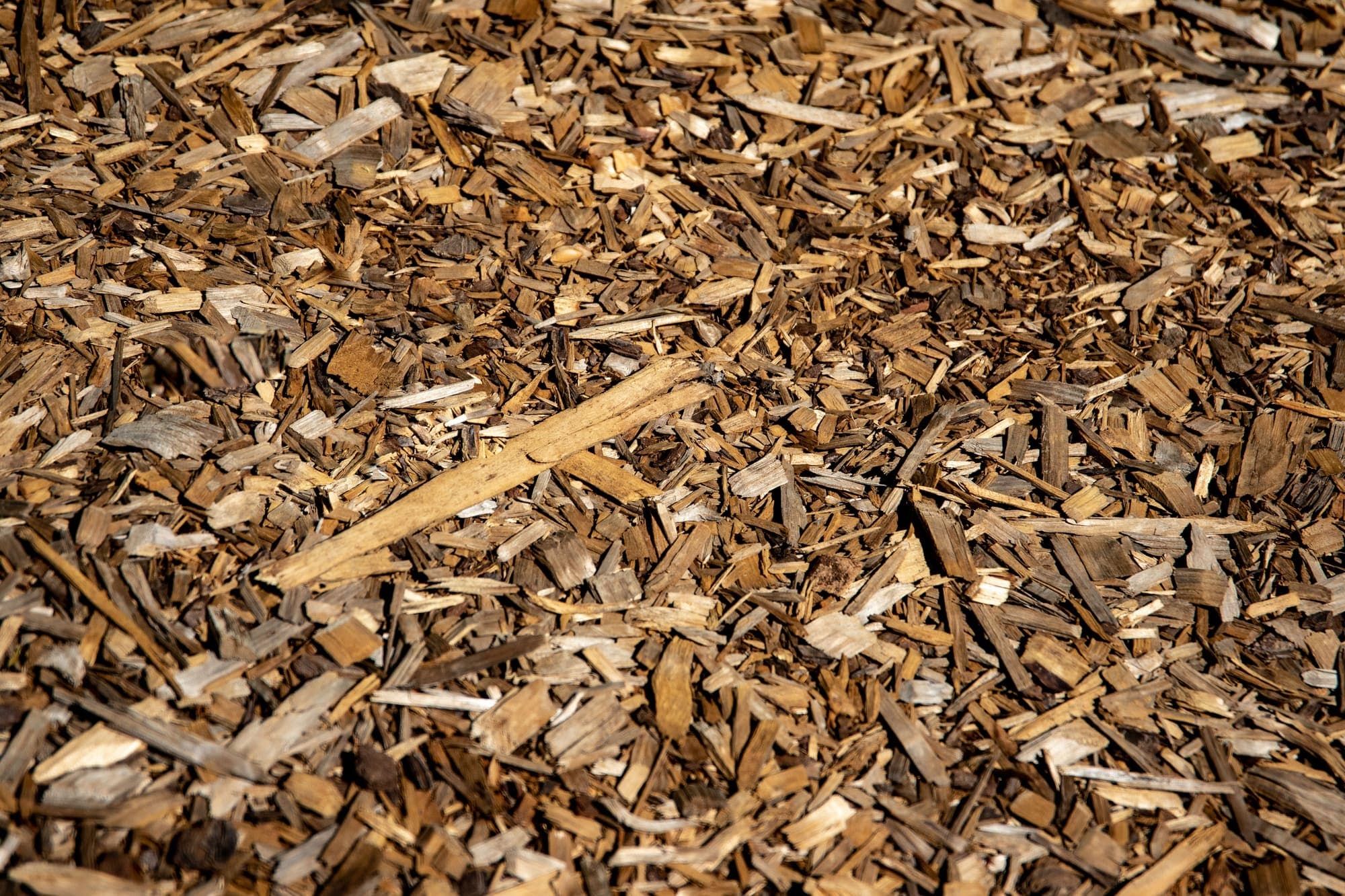
Under organic mulch in a planted Cairns garden bed, weed mat only works for a while: the mulch breaks down into a layer on top of the fabric, new weeds root in it, and perennials grow through. Weed mat earns its place under gravel, pebbles and paths where nothing is planted.
What matters with weed mat is what happens later, once the mulch on top has done what organic mulch does in a hot, wet climate.
This guide works through what Queensland Government guidance and university extension horticulturists say: why weeds end up growing on top of the mat, where fabric genuinely helps, how cardboard and a plain deep mulch compare, and what to do with old mat already buried in a bed. Trisim lays mulch across Cairns through its garden mulching service, so the final section covers what a bed needs before the mulch goes down.
Does weed mat actually work under mulch? For a while, then weeds grow on top
Weed mat under organic mulch may hold weeds back for a little while, but in a permanent garden bed the effect does not last. A University of Florida IFAS Extension horticulture agent puts it plainly: on paper, landscape fabric sounds like a good idea and it may work for a little while. Three things then undo it.
- Weeds on top: weed seeds find their way into the mulch on top of the fabric from nearby lawns and gardens and grow there. The fabric sits underneath them, so it cannot stop them.
- Weeds through: perennial weeds such as purple nutsedge eventually grow through fabric. A Washington State University extension fact sheet reaches the same finding: weeds eventually grow on top of and through landscape fabric, which makes removal difficult.
- The fabric itself: the same Washington State University fact sheet says landscape fabric can degrade in as little as one year if it is left exposed to sunlight, and that it looks worse as it breaks down.
Neither source was written for Queensland, and the weeds they name are not all the ones in a Cairns yard.
Why fast mulch breakdown works against weed mat
The Bureau of Meteorology's long-term averages for Cairns Aero show 2,025.5 mm of rain a year, including 404.8 mm in January, 437.5 mm in February and 422.1 mm in March. Trisim's garden mulching page notes that organic mulch breaks down quickly in the warmth and humidity of a Cairns summer, and does not sit there for three years the way a bark chip might in Melbourne. On weed mat, that broken-down mulch is the layer weeds root in, on top of the fabric.
Washington State University warns that any organic matter or soil on top of landscape fabric hastens its colonisation by weeds, which is why it says fabric should be covered with nothing but inorganic mulch such as pebbles. University of Florida adds that soil particles and decomposing mulch fill the pores in the fabric over time, so less air and water reach the plant roots below.
Where weed mat helps and where it harms
Weed mat is worth laying where nothing is planted and nothing organic will sit on it. Here is how the sources line up, setting by setting.
- Under gravel and pebbles: helps. Washington State University's advice is to cover fabric only with inorganic mulch such as pebbles. Queensland Government guidance notes rocks and pebbles reduce evaporation, though they do not feed the soil.
- Under paths with no plants: helps. University of Florida names mulched paths and other areas without garden plantings as the place to consider fabric.
- Annual or regularly dug beds: workable. Washington State University says fabric is effective in annual planting beds, or where the ground is regularly disturbed and the fabric can be replaced when needed.
- Permanent shrub and tree beds under organic mulch: harms. Plant roots can grow into the fabric and are damaged when it is pulled out, roots may push through the seams and break the barrier, and the clogged fabric lets less air and water through.
- Black plastic: worse again for a garden bed. Washington State University describes woven fabric as a vast improvement over impermeable black plastic. Queensland Government weed guidance lists black plastic, with mulch and newspaper, as a way of overlaying weeds to stop them germinating, which is a different job from a permanent layer under plants.
Can you put weed mat over weeds? Clear them first
You can lay weed mat over weeds, but clear them first, because established weeds can come back through a cover. Queensland Government weed guidance says overlaying weeds with mulch, newspaper or black plastic will usually prevent plants from germinating, and notes that commercial weed mats are also available. Germinating is the key word. Covering usually stops new seedlings; it does not reliably kill a perennial with runners or rhizomes already in the soil. The Washington State University extension horticulturist describes digging into a bed where a previous owner had laid fabric under topsoil, and finding the fabric completely covered with the roots and rhizomes of two perennial weeds.
Queensland Government waterwise guidance gives the preparation steps, and they apply with or without a barrier:
- 1Remove the weeds, taking runners and roots out where you can reach them.
- 2Rake or dig over the surface.
- 3Water the plants that are staying.
- 4If you want a barrier, lay newspaper to deter weed growth, but not too thick, because a thick layer reduces the air supply to the soil.
- 5Spread the mulch to the depth the product needs.
Is cardboard better than weed mat under mulch? Only in some beds
Cardboard under mulch is not clearly better than weed mat in a permanent Cairns garden bed, and it brings problems of its own. A Washington State University extension review of newspaper and cardboard sheet mulches found the following.
- Weed control: sheet mulches were often not as effective as other organic mulches, such as wood chips or bark, at preventing weed growth.
- Wet soil: on wet, poorly drained soil the layers compact and can create anaerobic conditions, shutting out water and air.
- Dry spells: if the sheets dry out they repel water, so rain or irrigation runs off instead of soaking in.
- Termites: termites were found to prefer cardboard over wood chips as a food source.
The same review says cardboard and newspaper sheet mulches can be effective in annual beds that are properly maintained, such as a vegetable patch that is dug and replanted. The termite finding deserves weight in this part of the state: the Queensland Building and Construction Commission says termites are particularly aggressive in North Queensland. Queensland Government guidance suggests a thin layer of newspaper to deter weeds, though the same Washington State University review advises against newspaper and cardboard sheet mulch in permanent ornamental beds.
What stops weeds in a Cairns bed without weed mat? Deep, coarse mulch, topped up
For permanent garden beds, the sources favour a coarse organic mulch laid straight onto weeded soil, at the right depth, and topped up as it breaks down. Washington State University's bottom line is that organic mulches are the preferred alternative for permanent plantings, because they can be reapplied for the life of the garden without damaging the plants. The same author reports pulling up old fabric, laying wood chips and finding the bed nearly free of the two perennial weeds a year later. Queensland Government waterwise guidance says coarse organic mulch lets water in easily and is good for reducing weeds and keeping soil cool, and that large chunks such as pine bark need a layer more than 5 cm deep.
The catch in Cairns is upkeep. Queensland Government guidance says organic mulch needs topping up frequently, preferably in autumn and spring, and Trisim's garden mulching page notes that in the wet tropics it does not sit there for three years the way a bark chip might in Melbourne. For product choice, depth and how much to order, see our guide to the right mulch for Cairns garden beds. Birds moving the mulch around is a separate problem, covered in our guide to brush turkeys and scrubfowl in Cairns gardens.
Old weed mat in a bed: lift it or leave it before re-mulching?
If old weed mat is buried under mulch and weeds are rooting on top, more mulch only adds to the layer they grow in. Lifting the mat lets fresh mulch sit on soil, but expect it to be work. Washington State University warns that weeds eventually grow on top of and through fabric, making removal difficult, and that plant roots can grow into fabric and are damaged when it is pulled out. Weigh the bed section by section.
- Open ground and torn or exposed sections: lifting the mat and the weedy layer on it lets new mulch sit on soil, the way the Washington State University author fixed their own bed.
- Close to established shrubs and trees: roots may have grown into the fabric, so pulling it out near them risks damage.
- Gravel areas with mat underneath: leave it, and keep leaves and debris swept off, because the same fact sheet says fabric needs continual maintenance to stay free of debris.
The Cairns Regional Council area is inside the electric ant biosecurity zone, and Queensland Government guidance lists garden waste, garden mulch and soil as electric ant carriers. Moving a carrier from a property in the restricted zone to another property needs a biosecurity instrument permit, but a permit is not required if it is moved to a waste facility that accepts electric ant carriers. The Queensland Government interactive map shows what movement restrictions are on a property. This is general information; check the current Queensland Government movement controls before taking anything away.
If the weed on top is Singapore daisy, handle it with care. Queensland Government (Business Queensland) guidance says it spreads mainly by cuttings from slashing and pruning, that the smallest cutting can regrow, and that physical control means hand-pulling and digging up runners. Our guide to Singapore daisy in Cairns gardens covers removal and disposal.
Getting a bed mulched without the weed mat
For most planted beds in Cairns, what holds weeds back is preparation plus the right depth of the right mulch, renewed on time. Trisim supplies and lays four different mulches, prepares the bed before the mulch goes down, works to the depth the product calls for, and pulls the layer back off stems and trunks as it lays. For beds where weeds are the main worry, Caribbean Pine Bark breaks down slowly and blocks weeds well.
For landlords and property managers, mulching a rental's beds is often the cheapest way to cut the weeding and watering load between inspections. If a bed already has old weed mat in it, mention that when you ask for a quote, which is settled before anyone starts, product and labour together. In Edge Hill, one Trisim team mows and edges, keeps the beds and hedges, and mulches. See the garden mulching page for the details, or request a free quote.
Common questions from Cairns residents
Only for a while in a planted garden bed. Under organic mulch, weed seeds get into the mulch on top of the mat and grow there, decomposing mulch clogs the fabric, and perennial weeds eventually grow through it. Weed mat does a much better job where nothing is planted and nothing organic sits on it, such as under gravel, pebbles or a path. For permanent planted beds, Washington State University prefers organic mulch, which can be reapplied without damaging the plants.
You can, but pull them out first. Queensland Government guidance says covering weeds with mulch, newspaper or black plastic usually stops new plants germinating, yet established perennials with runners or rhizomes can survive under a cover and grow back through it. Dig out the weeds, rake the surface and water the plants that are staying, then lay the barrier or the mulch.
Not for a permanent garden bed. A Washington State University review found cardboard and newspaper sheet mulches were often less effective than wood chips or bark at stopping weeds, can make wet, poorly drained soil airless and shed water when dry, and that termites preferred cardboard to wood chips as food. With termites particularly aggressive in North Queensland, cardboard is better kept to annual beds that are properly maintained, such as vegetable patches.
For a coarse mulch such as pine bark, more than 5 cm. Queensland Government waterwise guidance sets the depth by particle size, with large chunks needing a deeper layer and fine mulch laid thinner because it compacts. Coarse organic mulch is the type the same guidance describes as good for reducing weeds. In Cairns, plan on topping the layer up, preferably in autumn and spring, because it keeps breaking down.
It depends on what is growing in and around it. If weeds are rooting in broken-down mulch on top of the mat, lifting it lets fresh mulch sit on soil. Around established shrubs, go carefully: Washington State University notes that plant roots can grow into landscape fabric and are damaged when it is removed. Expect removal to be harder once weeds have grown through the fabric.
Not reliably. Queensland Government guidance says Singapore daisy spreads mainly by cuttings and the smallest cutting can regrow, and weed mat does nothing about plants that establish in the mulch on top of it. Singapore daisy is a category 3 restricted invasive plant under the Biosecurity Act 2014, so it must not be given away, sold or released into the environment. Hand-pull and dig out the runners, and dispose of the waste carefully.
Yes, gravel and pebble areas are where weed mat makes the most sense. Washington State University advises covering landscape fabric with nothing but inorganic mulch such as pebbles, because organic matter on top speeds up weed growth on the fabric, and University of Florida extension names paths and unplanted areas as the place to consider it. Sweep leaves and debris off regularly so they do not build into a seedbed.
Sources
- Waterwise gardening: Mulching, Queensland Government. Accessed .
- Environmental management for weeds (invasive plants), Queensland Government (Business Queensland). Accessed .
- Singapore daisy, Queensland Government (Business Queensland). Accessed .
- Movement controls for electric ants, Queensland Government (Business Queensland). Accessed .
- Protect against termites, Queensland Building and Construction Commission. Accessed .
- Climate statistics for Australian locations: Cairns Aero (031011), Bureau of Meteorology. Accessed .
- The Myth of Landscape Fabric, Washington State University Extension (Puyallup Research and Extension Center). Accessed .
- The Myth of Paper-Based Sheet Mulch, Washington State University Extension (Puyallup Research and Extension Center). Accessed .
- Consider Landscape Fabric Carefully, University of Florida IFAS Extension, Escambia County. Accessed .
Last reviewed by Trisim Property Maintenance. Rules and council services change, so check the source before you rely on a date or a fee.
Related services
From the Knowledgebase
- Which mulch suits a Cairns garden bed?Pine bark, bush mulch, red cypress or tea tree? How each suits a Cairns garden bed, how deep to lay it, how much to order, and where termites come in.Read the article
- Singapore daisy in Cairns gardens: what the law says, how to remove it and where it can goSingapore daisy is a restricted invasive plant in Queensland. What that means for a Cairns yard, how to pull it out, and how to dispose of it legally.Read the article
- Brush turkeys and scrubfowl in Cairns gardens: why they rake your mulch and what you can doBrush turkey or scrubfowl? Why Cairns mound builders rake garden mulch, when they build, what Queensland law allows, and how to keep mulch in the bed.Read the article
Get the beds mulched properly, no weed mat needed
Tell us about your beds, including any old weed mat, and we will quote the product and the labour before any work starts.