
Brown patches in a Cairns lawn: what is causing them, season by season, and what mowing can fix
By Trisim Property Maintenance, CairnsLast reviewed
- 9 min read
- 12 sources checked
- 7 questions answered
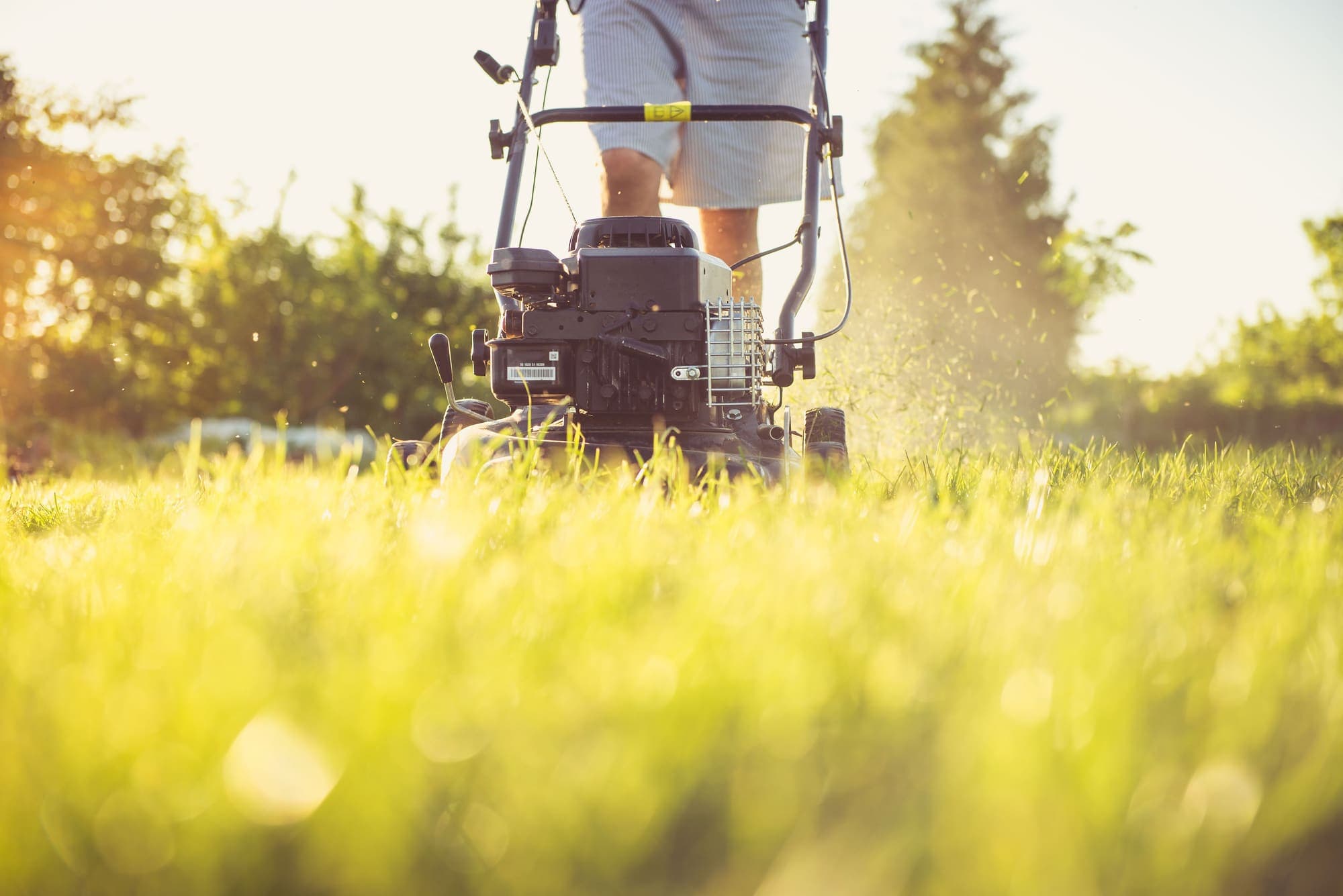
Brown patches in a Cairns lawn usually come from dry soil in the dry season, scalping on high spots, armyworm or curl grubs in the warmer months, a fungus in damp shade, or dog urine. Each has a quick check, and better mowing fixes scalping while pests and disease need a proper diagnosis first.
A brown patch is a symptom, not a diagnosis. The same straw-coloured circle can come from thirst, a mower set too low, caterpillars, grubs, a fungus or the family dog, and the fix for one can make another worse. A Cairns lawn grows through a hot, very wet summer and a long dry winter, so the likely culprit changes with the month.
This guide gives a seasonal shortlist of causes, a simple check for each, and a clear line between what better mowing fixes and what needs a turf or pest specialist. If the mowing is the part you want off your plate, Trisim runs a lawn mowing round across Cairns on a standing fortnightly cycle.
Why is my Cairns lawn going brown in patches? Start with the season
The quickest way to narrow down a brown patch in Cairns is to match it to the time of year, then run one check. Bureau of Meteorology averages for Cairns Aero show how far apart the seasons are: January, February and March each average more than 400 mm of rain, while every month from June to October averages under 50 mm.
- Dry season, June to October: dry or water-repellent soil. Check: tug the brown turf. If it stays anchored, root-eating grubs are less likely.
- Straight after a mow, any month: scalping. Check: the patches sit on humps or high spots, and the grass looks stemmy.
- Warmer, wetter months: armyworm or curl grubs. Check: birds working the lawn early or late in the day, or turf that lifts like a carpet.
- Wet, mild spells in low or shaded spots: a fungus. Check: a circle that returns to the same place.
- Any month, where a dog goes: urine. Check: a dead centre ringed by darker green grass.
More than one cause can be at work at once. If a patch fits none of these, get the cause identified before buying any treatment.
Dry season patches: thirsty grass or soil that will not wet
In the Cairns dry season, check for a water problem before suspecting a pest. Rainfall at Cairns Aero averages 33.2 mm in July and 26.5 mm in August, so an unwatered lawn lives on what the soil holds. Turf Queensland lists drought and water-repellent soils among the causes of lawn dieback that get mistaken for grub damage. Lawn Solutions Australia suggests aerating dry spots with a garden fork, then using a wetting agent so the soil absorbs water better.
Watering a dry patch is fine within Cairns Regional Council's permanent water conservation measures:
- Sprinklers: odd-numbered houses Tuesday, Thursday and Saturday, even-numbered houses Wednesday, Friday and Sunday, 5am to 9am and 5pm to 9pm only. None on Mondays.
- Hand-held hoses with a trigger nozzle, watering cans and buckets: any time.
Our guide to Cairns water restrictions for lawns and gardens covers the higher levels. Kansas State University also advises against mowing turf in extreme drought stress, because wheel tracks take a long time to recover.
Patches that show up straight after a mow are likely scalping
Brown patches that only start to show after mowing likely mean the lawn was scalped. Kansas State University describes scalping as the brown, stemmy look turf takes on when too much leaf blade comes off in one mow, and sets the limit at a third of the leaf. Usual causes are a mower out of adjustment, dull blades, or too long between cuts. Uneven ground is the other cause: the deck drops onto humps and cuts them lower than the rest.
- 1Measure the real cutting height: stand the mower on a flat, hard floor and measure up to the blade's cutting edge.
- 2Look at where the patches sit. On humps or high spots, the ground is the problem. Lawn Solutions Australia's fix is top dressing with soil or sand, no more than 5 to 10 mm thick at a time.
- 3Check the blade, since dull blades scalp on their own.
If the grass is already long, bring it down over three or four mows. Our guide to how often to mow in Cairns sets the interval month by month.
Armyworm and curl grubs: warm-month patches that spread fast
A brown patch that grows from one day to the next in the warmer months can point to insects. Turf Queensland notes that two different pests get called lawn grubs.
- Armyworm: a moth caterpillar that feeds on turf leaves at night and arrives in large numbers. Signs include birds feeding on the lawn in the early morning or late afternoon, red-brown wasp-like insects, and green-yellow pellet droppings. The Queensland Government's field crop pest page sets the control threshold for lawn armyworm at a rapidly expanding area with more than 60 per cent leaf loss.
- Armyworm eggs: hairy clumps of 600 to 700 eggs on shrubs or eaves near outdoor lights. Brush them off; hosing washes them into the lawn.
- Curl grubs: C-shaped beetle larvae that eat the roots. The lawn yellows, browns and dies, and the turf slips or rolls up like a carpet. Turf Queensland counts 25 or more grubs per square metre as a problem infestation.
To look, pour a bucket of water mixed with biodegradable detergent over the area to bring larvae up, and dig where the turf lifts. Turf Queensland places curl grub damage in subtropical areas from November to January; treat that as a guide in tropical Cairns.
Wet, mild weather and shade can point to a fungus
A circular brown patch that returns to the same low or shaded spot suggests a fungal patch disease. Mississippi State University Extension, writing about warm-season lawn grasses, says large patch recurs where dew and moisture linger, is favoured by free moisture and mild temperatures of roughly 15 to 24 degrees, and is usually not active in summer heat. In Cairns, look for it in low, damp or shaded spots during mild, wet spells rather than in open lawn in the January heat.
The check: at the patch edge, pinch a brown leaf tip and tug gently. If it comes away easily with a brown base, a fungus is likely.
Lawn Solutions Australia lists compaction, shade, overwatering and over fertilising among the conditions behind lawn disease, and suggests pruning trees to let light in and avoiding dusk watering so the lawn does not sit damp overnight. Changing those conditions comes first. Choosing a fungicide is a job for a turf specialist, working to the product label.
Dog urine spots have a dark green ring
Dog urine does kill patches of grass. NC State Extension describes the worst damage as dead, straw-coloured spots about 8 to 15 cm across with a ring of darker green grass. That ring helps tell it from disease, which usually lacks a darker green border, and Lawn Solutions Australia adds that urine patches do not spread.
- Dry ground: damage is worse on dry soil, in hot weather and when the grass is not actively growing, so water dry spots.
- Female dogs and puppies tend to cause worse spots because they squat.
- Flushing the spot with plenty of water straight after limits the damage.
- Training the dog to use a mulched area or the yard's edge is the lasting fix. Baking soda and gypsum are not recommended.
Spreading lawn grasses fill small spots in over time, and NC State says warm-season grasses such as couch (bermudagrass) and zoysia can recover in as little as a couple of weeks while actively growing.
What better mowing fixes, and what needs a specialist
Mowing causes some brown patches, cures others and does nothing for the rest. Sorting them first saves money on the wrong product.
- Mowing fixes scalping: a correct height, sharp blades, cutting only when the turf is dry, and taking no more than a third of the leaf.
- Mowing helps prevent armyworm: Turf Queensland recommends regular mowing through the warmer months, October to April.
- Specialist or label: a confirmed armyworm or curl grub infestation. Turf Queensland says to read the label before you buy and check the product is registered for home lawns against that pest.
- Specialist: a suspected fungus that persists after you change the conditions behind it, or any patch you cannot identify.
For landlords, a patch noted at a routine inspection is easier to sort when the lawn is already on a round. Our rental yard maintenance calendar sets the mowing round alongside the other seasonal yard jobs.
Getting the mowing side sorted
Trisim's part in a brown patch problem is the mowing. We run a standing fortnightly round across Cairns and turn up on the same day each cycle, so the grass does not get far enough ahead for the next cut to scalp it. We mulch mow, returning fine clippings to the root zone, and edging, line trimming and a clean-up of the hard surfaces come with the cut. A yard that has already got away is cleared back to a maintainable height first, then put on the round. For lawn pests or disease, see a turf or pest specialist.
We mow across Cairns, including Mount Sheridan, Bentley Park and Mooroobool. See the lawn mowing page for how the round works, or request a free quote. Every job is quoted before it starts.
Common questions from Cairns residents
In Cairns the usual causes are dry or water-repellent soil in the dry season, scalping from mowing too low or over high spots, armyworm or curl grubs in the warmer months, a fungus in damp shade, and dog urine. Note when the patch appeared and where it sits: right after mowing suggests scalping, fast spread in summer suggests insects, and a dark green ring suggests urine.
Scalping is cutting off so much of the grass leaf in one mow that the lawn turns brown and stemmy. Kansas State University and Turf Queensland both put the limit at a third of the leaf blade per cut. It usually happens when the grass has been left too long, the blades are dull, the mower sits lower than you think, or the deck drops onto humps.
Spreading lawn grasses generally fill damaged areas back in over time, and they recover fastest during the warm, growing months. The grass has to rebuild leaf before it can support its roots properly, so avoid another low cut in the meantime. Keep the area watered within the Cairns council rules and fix the cause, whether that is blade height, timing or high spots.
Look for a brown area that spreads quickly in the warmer months, birds feeding on the lawn in the early morning or late afternoon, wasp-like insects on the grass and small green-yellow pellet droppings. The caterpillars hide at the base of the grass by day and come out after sunset to feed, so search the base of the grass or check the lawn at dusk. Hairy egg clumps on eaves near outdoor lights are another sign.
It can. At its worst, NC State Extension says it leaves dead, straw-coloured spots about 8 to 15 cm across, ringed by dark green grass. Damage is worse on dry soil, in hot weather and when the grass is not actively growing. Flushing the area with plenty of water straight afterwards helps.
Yes, if the cause is dry soil, as long as you stay inside the rules. Under Cairns' permanent measures, a hand-held trigger hose, watering can or bucket can be used at any time, while sprinklers are limited to set days and hours by house number. Check the patch is not grubs or a fungus first, because overwatering encourages lawn disease.
If you do, follow the product label exactly, including its safety directions. Turf Queensland's advice is to read the label before you buy and make sure the product is registered for use on home lawns against the pest you actually have. If you are unsure what the pest is, get it identified or call a pest specialist.
Sources
- Native armyworm, Queensland Government (Business Queensland). Accessed .
- Household water use, leaks and conservation, Cairns Regional Council. Accessed .
- Water Restriction information sheets for all levels, Cairns Regional Council. Accessed .
- Monthly climate statistics: Cairns Aero (031011), Bureau of Meteorology. Accessed .
- White curl grub in lawns, Turf Queensland. Accessed .
- Lawn Armyworm or Lawn Grub, Turf Queensland. Accessed .
- Mowing Tips, Turf Queensland. Accessed .
- Scalping Turf, Kansas State University. Accessed .
- Dogs and Turfgrass Interactions, NC State Extension. Accessed .
- The Plant Doctor: Large (Brown) Patch of Warm-Season Turfgrasses, Mississippi State University Extension. Accessed .
- Why Does My Lawn Have Brown Patches?, Lawn Solutions Australia. Accessed .
- How to Stop Scalping While Mowing, Lawn Solutions Australia. Accessed .
Last reviewed by Trisim Property Maintenance. Rules and council services change, so check the source before you rely on a date or a fee.
Related services
Lawn mowing around Cairns
From the Knowledgebase
- How often should you mow in Cairns? Wet season, dry season and mowing after rainHow often to mow a Cairns lawn month by month, the legal mowing hours in Cairns, and how to tell when grass is dry enough to cut after wet season rain.Read the article
- Cairns water restrictions: what each level means for your lawn and garden, and how to water wellCairns sprinkler days and hours, what Levels 1 to 4 change, the new turf allowance, and how to keep a Cairns lawn and garden healthy on less water.Read the article
- A yard-ready rental: the Cairns landlord and property manager maintenance calendarA Cairns rental yard calendar and routine inspection checklist: wet and dry season jobs, RTA inspection rules, and who handles mowing, gutters and trees.Read the article
Keep the mower from causing the next brown patch
A standing fortnightly round across Cairns, mulch mowed, and quoted before any work starts.