
Who looks after the lawn and garden in a Queensland rental?
By Trisim Property Maintenance, CairnsLast reviewed
In a Queensland rental the tenant generally looks after routine yard work such as mowing, edging and weeding, while the owner usually handles tree lopping, major pruning and anything that needs specialist skills or equipment. The tenancy agreement can change that split, so read its special terms first.
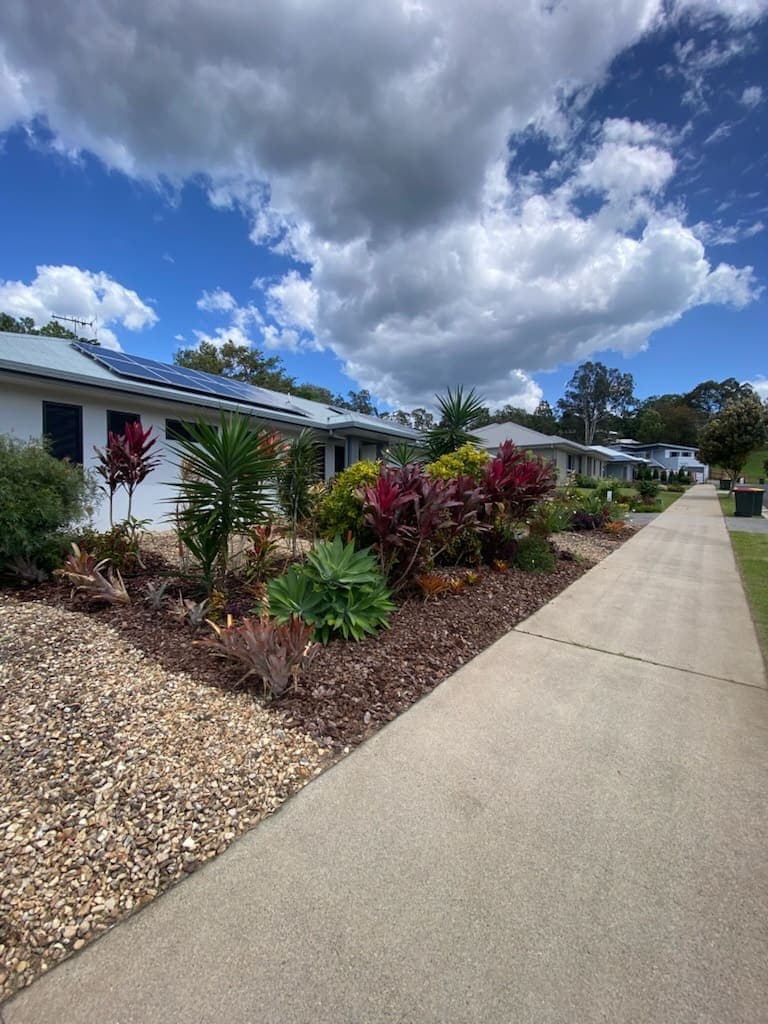
The Residential Tenancies Authority (RTA), Queensland's tenancy regulator, sets out the default position on its lawns, gardens and trees page. Everyday yard upkeep sits with the tenant and bigger or specialist work sits with the owner, but the RTA says the arrangements for lawns and gardens should be listed in the tenancy agreement. The agreement, together with the entry condition report, is what the yard gets measured against.
This guide goes through the rules item by item for lawns, garden beds, hedges, trees, gutters, green waste and pools. It explains how fair wear and tear applies outside, what happens to the yard between tenancies, and the Cairns layer the RTA pages do not cover: a wet season that changes how often a yard needs attention.
What the RTA says about lawns, gardens and trees
On the tenant's side, the RTA states that generally the tenant is responsible for yard work such as mowing, edging and weeding, and that this should be specified in the agreement. In the RTA's gardens and maintenance podcast it describes the tenant's obligations in the same plain terms: mow the lawns, sweep the paths and do the weeding.
On the owner's side, the RTA says major work such as tree lopping or pruning trees and shrubs is usually carried out by the property manager or owner. Plants, hedges or lawns that need specialist upkeep are usually not the tenant's responsibility unless they agree to take it on, and the RTA's podcast adds that a tenant cannot be required to have specialist knowledge or specialist equipment.
Special terms can move these lines. An agreement might put all yard maintenance on the owner, or set out who looks after a pool or a fruit tree. What a special term cannot do is require the tenant to sign a maintenance contract or use a particular company: the RTA is explicit that tenants cannot be required to enter into a maintenance contract.
The RTA also says the condition of the lawns and gardens should be recorded on the Entry condition report (Form 1a) at the start and the Exit condition report (Form 14a) at the end. Those two documents are what any later disagreement turns on.
Who does what: the item by item list
Read this list as the default. Where your tenancy agreement says something different, the agreement applies.
- Lawn mowing and edging: the tenant, generally, unless the agreement puts it on the owner.
- Weeding and tidying garden beds: the tenant. The RTA's vacating checklist names tidying and weeding gardens alongside mowing and edging lawns.
- Hedges and plants needing specialist care: usually the owner, unless the tenant agrees to do it.
- Tree lopping and major pruning: usually the owner or property manager.
- Fallen branches: the tenant can deal with small branches that are easily disposed of. The RTA's gardens podcast adds that larger branches needing specialist equipment, such as a chainsaw, may be the owner's responsibility, and the RTA says damage caused by fallen branches may be the owner's responsibility to repair.
- Gutters: if the tenant has not caused the blockage, the RTA says the owner may be responsible for cleaning them. Owners who want it done before the storms can book gutter cleaning.
- Green waste and rubbish: the RTA's vacating checklist asks the tenant to remove rubbish from the property. A pile of prunings left behind at the end of a lease is worth clearing through green waste removal before the exit inspection.
- Pools: the RTA's gardens podcast says both parties need to be clear on who is responsible for what, that pools can be a lot of work, and that a tenant cannot be required to use a specific business to maintain one. The tenant should report any changes quickly.
- Fruit trees: special terms should cover them. Without a term, the RTA says the right to occupy the property may give the tenant the right to pick the fruit during the tenancy.
What fair wear and tear means outside
A tenant must leave the property in the same condition it was in at the start of the tenancy, less fair wear and tear. The RTA defines fair wear and tear as what happens during normal use of a property and through changes that come with ageing and exposure to the environment. Its podcast confirms the idea includes the garden.
The RTA's own garden example is useful: garden mulch breaking down over time is fair wear and tear, while a tenant's dog digging up the mulch is not. Dirt, grime and damage, including damage by an approved pet, are never fair wear and tear.
Weather is treated with some sense. The RTA says a tenant may not be held responsible if lawns, trees or other plants die because of complying with local council water restrictions or excessive dry weather, but the tenant should still report it to the property manager or owner. Reporting it early stops a dying lawn from being read as the tenant's fault at the exit inspection.
A lawn that has simply not been mown, or beds that have gone to weed, are a different matter. Those are the upkeep items the RTA's vacating checklist asks the tenant to do, and the exit report is compared with the entry report to see whether the yard is back where it started.
Bond, the exit report and yard disputes
At the end of the lease the Exit condition report (Form 14a) is compared with the entry report. Under the RTA process, the property manager or owner sends the tenant a completed copy within three business days, and must keep the signed report for at least one year after the tenancy ends. If they claim against the bond or dispute a refund request, they must give the tenant supporting evidence within 14 days.
When the two sides cannot agree, either can use the RTA's dispute resolution service, a free and confidential conciliation service requested with a Dispute resolution request (Form 16). If conciliation does not settle it, the RTA issues a Notice of unresolved dispute and the matter can go to the Queensland Civil and Administrative Tribunal (QCAT).
For both sides, dated photos of the lawn, edges and beds at entry and exit are the simplest protection. They settle most arguments about whether the grass was long, the beds were weeded or the mulch was already thin.
Vacant between tenancies: who mows then?
Between tenancies there is no tenant and no tenancy agreement, so the tenant's yard obligations do not apply. The yard is the owner's to arrange, usually through the property manager, and the owner can choose whoever they like to do it.
In Cairns a vacant month in the wet season is long enough for a lawn to get well away from a normal cut, which matters when the property is being shown to new tenants. Putting a vacant rental on a regular lawn mowing round until the next lease starts means prospective tenants see a yard that looks looked after.
How the Cairns wet season changes the workload
Most lease clauses say something like keep the lawns mowed and the gardens tidy. In Cairns that is a very different job in February than in August. Bureau of Meteorology climate statistics for Cairns Aero (records from 1942) show mean rainfall of 404.8mm in January, 437.5mm in February and 422.1mm in March, with about 16 days of rain of at least 1mm in each of those months. August averages 26.5mm across about 5 rain days.
December and April sit between the two, each averaging a little under or just over 200mm. In practice the lawn needs attention far more often from about December to April than it does through the dry, and a tenant who mowed monthly in winter can fall behind quickly once the wet arrives.
Routine inspections help catch this early. The RTA says they cannot be carried out more than once every three months unless the tenant agrees in writing, and need at least 7 days' notice on an Entry notice (Form 9). Trisim mows lawns across suburbs such as Smithfield and Woree, on a fortnightly round that is set up to hold through the wet.
Getting it done: owner-paid rounds and tenant tidy-ups
If the agreement puts the yard on the owner, or the property is vacant, a standing fortnightly round is the usual answer. Trisim's lawn mowing round is the same day each fortnight, with mulch mowing, edging, line trimming and a blow down of the paths, and it is quoted before it starts.
If you are the tenant and the yard is yours to hand back, an end-of-lease yard clean-up covers the lawn, edges and garden beds as one job, booked as close to the exit inspection as the schedule allows so the grass has not grown back by handover. A yard that has been let go for a season is quoted as a clearing job before any work begins.
Whoever pays, the choice of contractor is theirs. Tenants cannot be made to use a particular company, and owners can pick who looks after a yard that is their responsibility. For property managers weighing up a contractor, Trisim is fully insured for public liability, the team is police-checked, and its ABN is 24 306 689 336.
Common questions from Cairns residents
Generally, yes. The Residential Tenancies Authority says the tenant is usually responsible for yard work such as mowing, edging and weeding, but that this should be specified in the tenancy agreement. Some agreements put yard maintenance on the owner instead, so check the special terms. Whatever the agreement says, the lawn's condition at the start should be recorded on the entry condition report, because that is the standard the yard is compared with when the tenancy ends.
Usually the owner. The RTA says major work such as tree lopping or pruning trees and shrubs is usually carried out by the property manager or owner, and that plants or hedges needing specialist upkeep are usually not the tenant's responsibility unless they agree. A tenant cannot be required to have specialist knowledge or equipment. Small fallen branches that are easy to dispose of are the tenant's to clear, while larger ones needing a chainsaw may fall to the owner.
No. The RTA states that tenants cannot be required to enter into a maintenance contract or use a specific company, and it says the same about pool maintenance. A tenant who is responsible for the yard can do the work themselves or hire anyone they choose, as long as the yard is kept to the standard in the agreement. The owner can choose the contractor only for work that is the owner's responsibility, or while the property is vacant.
It can, if the yard is not in the same condition as at the start of the tenancy, less fair wear and tear. The exit condition report is compared with the entry report, and mowing, edging and weeding are on the RTA's vacating checklist. An owner claiming against the bond must give the tenant supporting evidence within 14 days. If the two sides cannot agree, the RTA's free dispute resolution service can help, with QCAT as the next step.
The owner. Between tenancies there is no tenant and no tenancy agreement, so arranging the yard falls to the owner, usually through their property manager. In Cairns this matters most from about December to April, when monthly rainfall averages around 200mm or more and January to March each average over 400mm. A vacant yard left for a few weeks in that stretch can look neglected by the time prospective tenants arrive.
Fortnightly is a realistic baseline from about December to April. Bureau of Meteorology figures for Cairns Aero show mean rainfall above 400mm in each of January, February and March, with around 16 rain days a month, and grass grows quickly in that. Through the dry season some lawns can stretch longer between cuts. If a lease simply says keep the lawn mowed, the wet season is when that clause is hardest to keep up with.
Sources
- Lawns, gardens and trees, Residential Tenancies Authority (Queensland). Accessed .
- Gardens and maintenance (podcast), Residential Tenancies Authority (Queensland). Accessed .
- Drains and gutters, Residential Tenancies Authority (Queensland). Accessed .
- Cleaning when vacating a property, Residential Tenancies Authority (Queensland). Accessed .
- Fair wear and tear, Residential Tenancies Authority (Queensland). Accessed .
- Exit condition report, Residential Tenancies Authority (Queensland). Accessed .
- Routine inspections, Residential Tenancies Authority (Queensland). Accessed .
- Rental premises use, condition and repairs fact sheet, Residential Tenancies Authority (Queensland). Accessed .
- RTA dispute resolution service, Residential Tenancies Authority (Queensland). Accessed .
- Climate statistics for Cairns Aero (station 031011), Bureau of Meteorology. Accessed .
Last reviewed by Trisim Property Maintenance. Rules and council services change, so check the source before you rely on a date or a fee.
Lawn mowing around Cairns
From the Knowledgebase
- Who cleans the gutters in a Queensland rental?What the RTA says tenants and owners each cover for rental gutters in Queensland, who pays for overflow damage, entry notice rules and when to book in Cairns.Read the article
- A yard-ready rental: the Cairns landlord and property manager maintenance calendarA Cairns rental yard calendar and routine inspection checklist: wet and dry season jobs, RTA inspection rules, and who handles mowing, gutters and trees.Read the article
Set up rental mowing or an end-of-lease clean-up in Cairns
Owners and property managers can put a rental on a fortnightly round. Moving out? Book the yard close to your exit inspection.